What Is the Xiaomi Ecosystem and Why Is It Expanding So Fast?
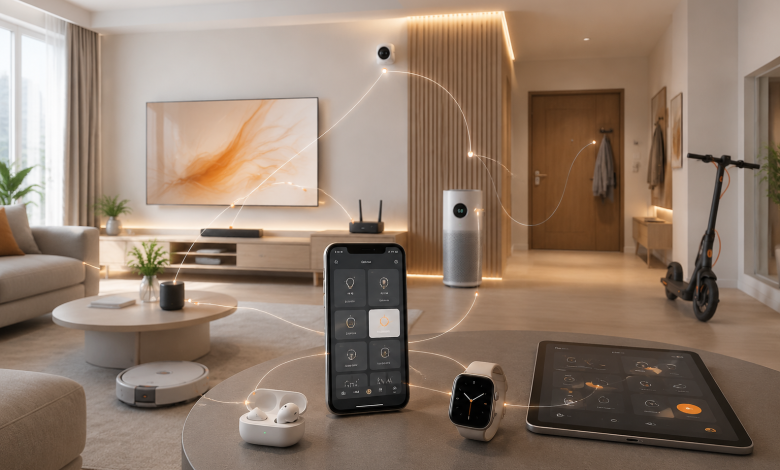
The Xiaomi ecosystem is one of the most ambitious connected technology networks in the consumer electronics market. in this article of xiaomi on top we say more about it.
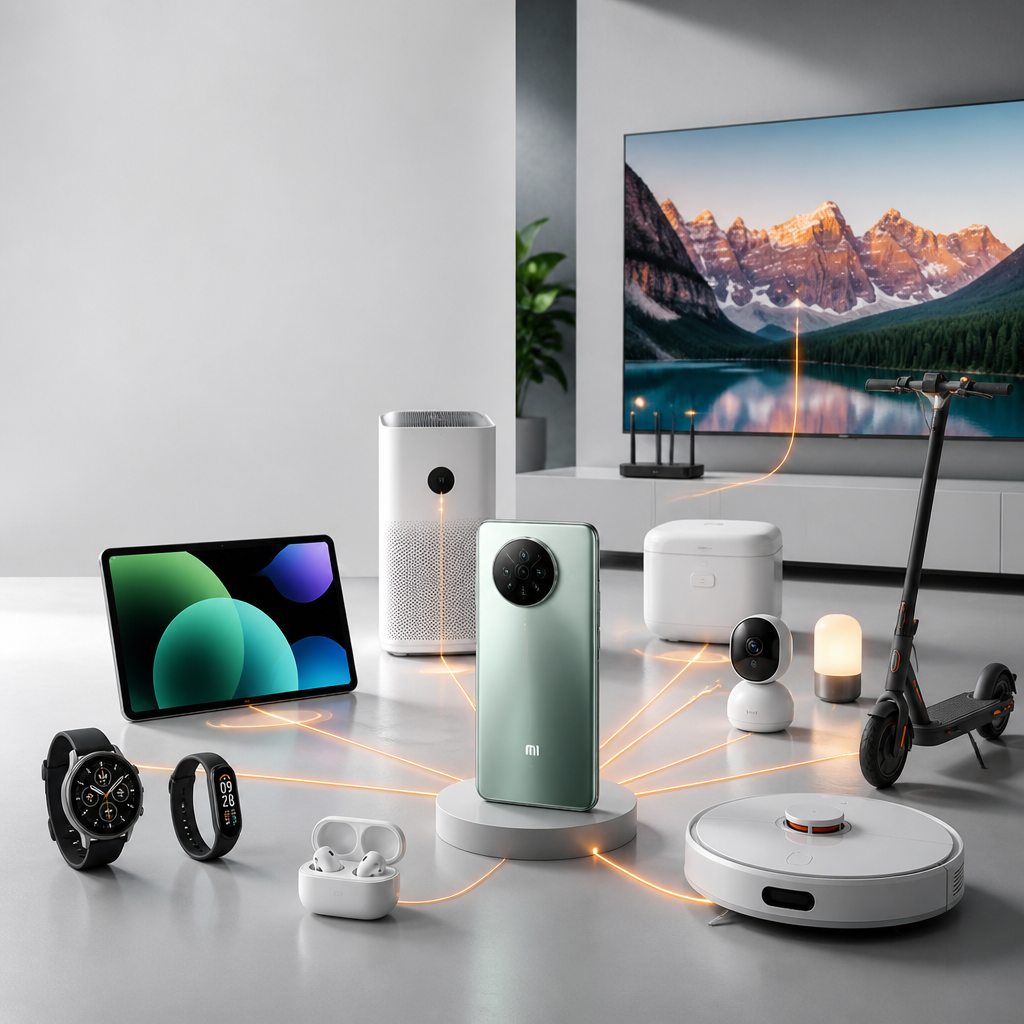
It brings together smartphones, tablets, smartwatches, fitness bands, earbuds, televisions, cameras, robot vacuum cleaners, air purifiers, lights, scooters, kitchen appliances, and many other everyday devices under a broad digital environment.
At first, Xiaomi became known mainly for smartphones with strong specifications and competitive prices. Over time, the company moved far beyond mobile phones and started building a wider ecosystem around connected living. Today, Xiaomi is not just a smartphone brand. It is a technology platform that connects personal devices, home devices, software services, and lifestyle products.
This ecosystem is expanding quickly because it solves a simple problem: people want technology that works together. A phone should connect easily to earbuds. A smartwatch should sync health data with an app. A security camera should be manageable from the same mobile environment as a smart lamp or robot vacuum. A tablet, phone, wearable, and smart home device should feel like parts of one connected experience.
Xiaomi has built its ecosystem around this idea. By combining affordable hardware, broad product variety, software integration, and global availability, Xiaomi has created a fast-growing network of devices that appeals to millions of users around the world.
What Does the Xiaomi Ecosystem Mean?
The Xiaomi ecosystem refers to the collection of products, software, services, and connected devices associated with Xiaomi and its related brands. This includes Xiaomi-branded devices, Redmi products, POCO smartphones, Mijia smart home devices, and many partner products that work within Xiaomi’s connected environment.
In simple terms, the Xiaomi ecosystem is a technology environment where different devices can connect, communicate, and support each other.
A user may start with a Xiaomi smartphone, then add Redmi Buds, a Xiaomi Smart Band, a Mi Robot Vacuum, a smart camera, an air purifier, and smart lights. Many of these products can be controlled or monitored through Xiaomi apps such as Mi Home or Xiaomi Home, depending on the region.
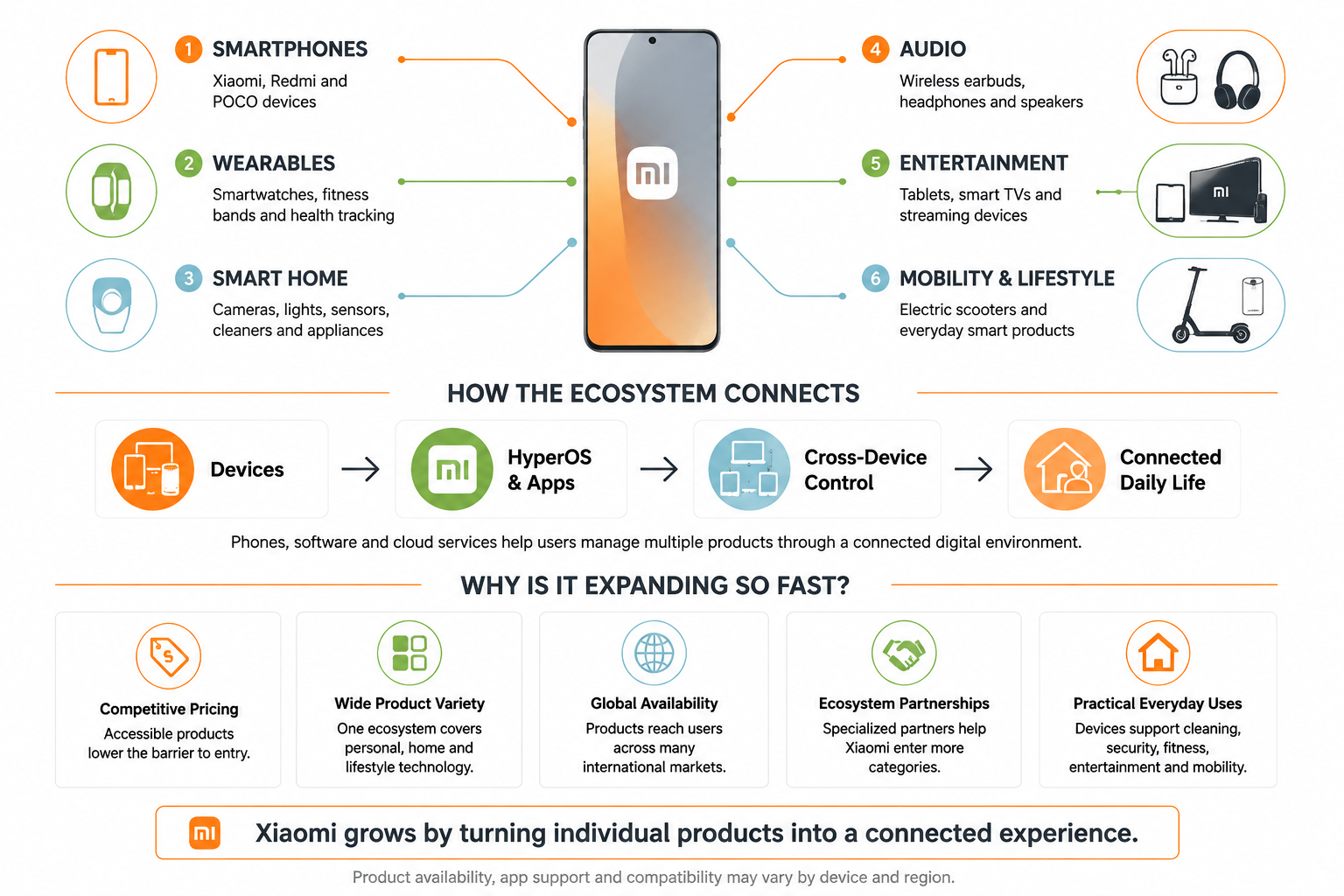
The ecosystem is not limited to one product category. It covers several areas of everyday technology:
- Smartphones and mobile devices
- Tablets and laptops
- Smartwatches and fitness trackers
- Wireless earbuds and audio products
- Smart TVs and streaming devices
- Smart home cameras and sensors
- Robot vacuum cleaners
- Air purifiers and fans
- Smart lights and plugs
- Routers and networking devices
- Kitchen and lifestyle appliances
- Electric scooters and mobility products
This wide coverage is one of the main reasons Xiaomi has become a powerful ecosystem brand rather than just another electronics manufacturer.
The Smartphone as the Center of the Xiaomi Ecosystem
For most users, the Xiaomi ecosystem begins with a smartphone. Xiaomi, Redmi, and POCO phones act as the central control point for many connected products.
A smartphone can connect to wireless earbuds, manage smart home devices, display fitness data from a wearable, control a television, receive security camera alerts, and manage system notifications. This makes the phone the practical center of the user experience.
Xiaomi’s smartphone strategy also helps the ecosystem grow. The company offers devices across many price ranges, from entry-level Redmi models to premium Xiaomi flagships and performance-focused POCO phones. This gives users multiple entry points into the ecosystem.
Someone may buy an affordable Redmi phone first, then later purchase Xiaomi earbuds, a fitness band, or a smart home camera. Another user may begin with a flagship Xiaomi phone and build a more complete setup with tablets, wearables, smart appliances, and home automation devices.
The phone becomes the gateway, but the ecosystem becomes the reason users stay.
HyperOS and the Role of Software Integration
Software is a major part of any ecosystem. Xiaomi’s move toward HyperOS shows that the company wants to create a more unified experience across phones, tablets, wearables, smart home devices, and other connected products.
HyperOS is designed to support a broader connected environment rather than only a smartphone interface. It aims to improve device communication, performance, cross-device interaction, and smart connectivity.
For users, software integration can appear in practical ways:
- Easier pairing between devices
- Better notification management
- Cross-device file sharing
- Connected device control
- Smart home shortcuts
- Improved performance optimization
- More consistent design across Xiaomi products
- Deeper connection between mobile and AIoT devices
The success of an ecosystem depends heavily on how smoothly its software connects different products. If devices are difficult to pair, unreliable, or separated into disconnected apps, users lose interest quickly. Xiaomi’s software direction is important because it helps turn separate products into a more complete experience.
HyperOS is still evolving, and feature availability can vary by device, model, and region. However, its long-term purpose is clear: Xiaomi wants software to become the bridge between its many hardware categories.
Xiaomi Smart Home: A Major Growth Engine
One of the strongest parts of the Xiaomi ecosystem is smart home technology. Xiaomi and its ecosystem partners offer a large range of connected home products, often at prices that are more accessible than many competitors.
Xiaomi smart home products may include:
- Security cameras
- Door and window sensors
- Motion sensors
- Smart light bulbs
- Smart ceiling lights
- Smart plugs
- Robot vacuum cleaners
- Air purifiers
- Smart fans
- Humidifiers
- Thermometers
- Smart door locks
- Smart speakers
- Electric curtains
- Kitchen appliances
Many of these products can be managed through the Xiaomi Home or Mi Home app. Users can create automations, monitor device status, adjust settings, and connect multiple devices together.
For example, a motion sensor can trigger a smart light. An air purifier can respond to indoor air quality. A security camera can send alerts to a phone. A robot vacuum can be scheduled while the user is away.
This is where the ecosystem becomes more valuable than individual products. A single smart bulb is useful, but a group of connected devices can create a smarter home environment.
Wearables and Health Tracking in the Xiaomi Ecosystem
Wearables are another important part of Xiaomi’s growth. Xiaomi Smart Band devices, Redmi wearables, and Xiaomi smartwatches have attracted users who want health tracking, fitness data, notifications, and long battery life at reasonable prices.
Wearables connect naturally to smartphones and mobile apps. They can track steps, heart rate, sleep, workouts, stress, blood oxygen levels, and other wellness indicators depending on the model.
These devices strengthen the ecosystem because they create daily interaction. A smartphone may be used many times per day, but a wearable stays on the wrist for long periods. It becomes part of the user’s routine.
Common wearable features include:
- Fitness tracking
- Sleep monitoring
- Heart rate tracking
- Workout modes
- Notification alerts
- Music controls
- Weather updates
- Alarm and timer tools
- Long battery life
- Smartphone app synchronization
It is important to understand that consumer wearables are not medical devices. Their data can support personal awareness and fitness habits, but they should not replace professional medical advice or certified medical equipment.
Audio Products and Everyday Connectivity
Wireless earbuds and headphones are among the easiest ways for users to enter the Xiaomi ecosystem. Redmi Buds, Xiaomi Buds, and other audio products are designed for music, calls, gaming, travel, and daily use.
Audio products may seem simple, but they play an important role in ecosystem growth. When earbuds connect quickly to a phone, display battery levels, support noise cancellation, and offer app-based settings, users experience the benefit of connected hardware and software.
Important audio features often include:
- Bluetooth connectivity
- Active noise cancellation
- Transparency mode
- Low-latency gaming mode
- Touch controls
- Dual-device connection
- App-based customization
- Battery status display
- Fast charging case support
These products are frequently more affordable than premium alternatives, which helps Xiaomi reach users in many markets. Once a user has a positive experience with Xiaomi earbuds, they may be more likely to explore other Xiaomi devices.
Redmi and POCO: Expanding the Ecosystem Through Choice
Redmi and POCO play major roles in Xiaomi’s broader strategy. They help Xiaomi reach different types of users without depending on one product identity.
Redmi usually focuses on value, reliability, and broad market appeal. It is popular among users who want strong everyday performance at a competitive price. Redmi phones, earbuds, tablets, TVs, and wearables help bring more people into the Xiaomi ecosystem.
POCO often focuses on performance, gaming, and bold specifications for the price. Many POCO users care about processors, refresh rates, battery life, charging speed, and gaming performance. This gives Xiaomi another path to reach a younger or performance-focused audience.
Together, Xiaomi, Redmi, and POCO create a layered ecosystem:
- Xiaomi targets premium, innovation-focused, and broad technology users
- Redmi targets value-conscious and mainstream consumers
- POCO targets performance-focused users and mobile gamers
This multi-brand structure helps Xiaomi expand faster because it can serve different budgets, markets, and user priorities.
Why Is the Xiaomi Ecosystem Expanding So Fast?
The rapid expansion of the Xiaomi ecosystem is not accidental. Several strategic factors have helped the company grow across different markets and product categories.
Competitive Pricing
Xiaomi has built much of its reputation on strong value. Many Xiaomi products offer attractive specifications and useful features at prices lower than comparable alternatives.
This pricing strategy lowers the barrier to entry. Users can try a Xiaomi product without making a very large investment. If the experience is good, they may add more devices over time.
Wide Product Variety
Xiaomi sells products in many categories. This variety allows the company to be present in different parts of daily life.
A user may interact with a Xiaomi phone in the morning, wear a Xiaomi band during exercise, use Xiaomi earbuds while commuting, control Xiaomi lights at home, and run a Xiaomi robot vacuum during the day. Few consumer technology brands cover such a wide range of daily scenarios.
Strong Ecosystem Partnerships
Xiaomi has worked with many ecosystem and partner companies to produce connected products. This strategy allows Xiaomi to expand beyond what one company could design and manufacture alone.
Partner products can bring specialization in areas such as home appliances, security devices, lighting, cleaning technology, and lifestyle gadgets. Xiaomi benefits by offering a broader catalog, while users benefit from more options.
Global Market Reach
Xiaomi has a strong presence in Asia, Europe, Latin America, the Middle East, and other regions. Its global distribution has helped the ecosystem reach users outside China.
However, availability can vary significantly by region. Some products launch globally, while others remain limited to selected markets. This is one reason users should check regional compatibility before buying Xiaomi smart home devices or imported products.
Mobile-First User Experience
Because smartphones are central to modern life, Xiaomi’s phone business supports its entire ecosystem. Once users install Xiaomi apps and connect devices to their phone, the ecosystem becomes more convenient.
This mobile-first approach helps Xiaomi introduce users to additional products through familiar software and daily device usage.
Practical Everyday Products
Many Xiaomi ecosystem products are not luxury gadgets. They are practical items for common needs: cleaning, lighting, charging, air quality, security, fitness, entertainment, and communication.
This practical focus makes the ecosystem easier to adopt. Users do not need to redesign their entire lifestyle. They can add one useful device at a time.
How Xiaomi Compares With Other Tech Ecosystems
Xiaomi is not the only company building an ecosystem. Apple, Samsung, Google, Amazon, and Huawei also offer connected device environments. However, Xiaomi’s approach is different in several ways.
Apple focuses heavily on premium devices, software control, and seamless integration. Samsung offers a broad ecosystem across phones, TVs, appliances, wearables, and SmartThings. Google focuses on Android, Nest, AI, and cloud services. Amazon has a strong smart home presence through Alexa and Echo devices.
Xiaomi’s advantage is its combination of affordability, variety, and practical hardware. It offers a wide selection of products across many price points, which makes the ecosystem accessible to more users.
The trade-off is that Xiaomi’s ecosystem can sometimes be more complex. Regional versions, app compatibility, server regions, product naming, and software update timing may vary. Users may need to check details carefully before buying imported devices.
Common Challenges in the Xiaomi Ecosystem
Although the Xiaomi ecosystem is powerful, it is not perfect. Users should understand some common challenges before investing deeply in it.
Regional Compatibility
Some Xiaomi smart home products are designed for specific server regions. A device purchased from one market may not work properly with an account set to another region. This can affect setup, automation, language support, and app visibility.
Software Update Differences
HyperOS and Android updates may arrive at different times depending on device model, country, carrier, and region. Two users with similar phones may receive updates weeks or months apart.
Product Naming Confusion
Xiaomi sometimes sells similar products under different names in different markets. A Redmi device in one region may share hardware with another model elsewhere. This can make comparisons more difficult.
App Fragmentation
Some devices may require Xiaomi Home, Mi Fitness, Zepp Life, or another app depending on the product category and region. This can create confusion for beginners.
Availability of Official Support
Support quality and warranty coverage may vary by country. Buying imported devices can create problems if local warranty service is not available.
These challenges do not remove the value of the ecosystem, but they make research important before purchasing.
How to Start Building a Xiaomi Ecosystem
Building a Xiaomi ecosystem does not require buying everything at once. A better approach is to start with the devices that solve real needs.
A practical starting path may look like this:
- Start with a Xiaomi, Redmi, or POCO smartphone
- Add wireless earbuds for daily audio
- Add a Xiaomi Smart Band or smartwatch for fitness tracking
- Choose one smart home product, such as a camera, lamp, or robot vacuum
- Use Xiaomi Home or related apps to manage connected devices
- Check compatibility before buying more smart home products
- Expand slowly based on actual daily use
This method helps users avoid unnecessary purchases. The best ecosystem is not the largest one. It is the one that makes daily life easier.
The Future of the Xiaomi Ecosystem
The Xiaomi ecosystem will likely continue expanding across artificial intelligence, electric vehicles, smart appliances, home automation, wearable health, robotics, and cross-device software experiences.
Xiaomi has already shown interest in building a connected world where phones, homes, vehicles, and personal devices communicate more naturally. HyperOS is an important part of this direction because it provides a software foundation for more connected experiences.
Future growth may include:
- Smarter home automation
- Better AI-powered device control
- Deeper phone-to-tablet integration
- More advanced wearables
- Expanded electric mobility products
- Improved global software consistency
- Stronger privacy and security controls
- More connected lifestyle devices
As technology becomes more integrated into daily routines, ecosystems will become more important. Users will not only compare individual products. They will compare how well those products work together.
Xiaomi is expanding quickly because it understands this shift. Its ecosystem strategy is built around practical technology, accessible pricing, and broad device coverage.
Infographic Xiaomi Ecosystem
Frequently Asked Questions
What is the Xiaomi ecosystem?
The Xiaomi ecosystem is a connected network of Xiaomi, Redmi, POCO, Mijia, and partner products. It includes smartphones, wearables, smart home devices, audio products, tablets, TVs, appliances, and software platforms that help these devices work together.
Why is the Xiaomi ecosystem growing so fast?
The Xiaomi ecosystem is growing quickly because Xiaomi offers affordable products, a wide device catalog, strong smartphone integration, smart home options, wearable devices, and global market availability. Its products also solve practical everyday needs.
Do all Xiaomi ecosystem products work together?
Not always. Many Xiaomi products can connect through Xiaomi Home, Mi Home, Mi Fitness, or related apps, but compatibility may depend on region, server settings, device model, app version, and local availability.
Is HyperOS important for the Xiaomi ecosystem?
Yes. HyperOS is important because it supports Xiaomi’s broader connected device strategy. It is designed to improve integration between phones, tablets, wearables, smart home products, and other connected devices.
What is the best way to start using the Xiaomi ecosystem?
The easiest way to start is with a Xiaomi, Redmi, or POCO smartphone. After that, users can add earbuds, a smartwatch or fitness band, and one or two smart home products based on real daily needs.
Final Thoughts
The Xiaomi ecosystem is a connected network of smartphones, wearables, smart home devices, software platforms, accessories, and everyday technology products. It is expanding quickly because Xiaomi combines affordability, variety, software integration, global reach, and practical product design.
For users, the main benefit is convenience. Devices can work together, apps can manage multiple products, and technology can become more useful in daily life. A phone, smartwatch, earbuds, robot vacuum, camera, and air purifier can become parts of one connected environment.
At the same time, users should pay attention to compatibility, regional differences, software updates, and official support before buying new devices. The Xiaomi ecosystem offers strong value, but informed choices create a better experience.
As Xiaomi continues to develop HyperOS, smart home products, wearables, and connected lifestyle technology, its ecosystem will likely become even more important in the global technology market.
For anyone interested in affordable connected technology, the Xiaomi ecosystem is worth understanding.